
L’Università di Verona promuove una gestione responsabile delle risorse naturali attraverso l’innovazione tecnologica, l’efficienza infrastrutturale e la promozione di stili di vita sani.
Il nostro impegno mira a ridurre l’impronta ambientale dell’Ateneo in linea con gli obiettivi dell’Agenda 2030 delle Nazioni Unite.
Acquisto e gestione energia
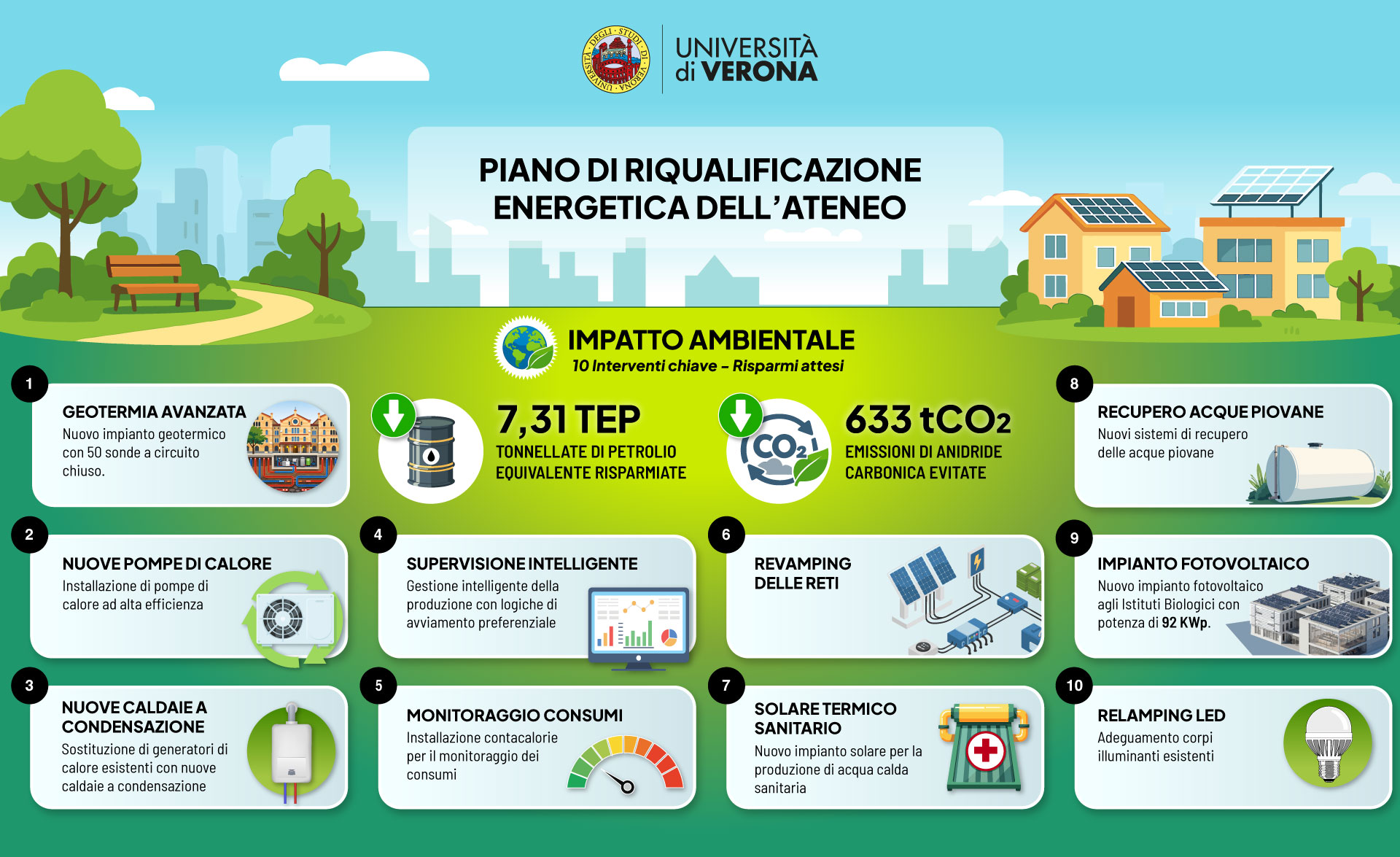
L’Ateneo persegue una strategia di progressiva decarbonizzazione e ammodernamento degli impianti. Nel 2024 è stata approvata un’importante operazione di Partenariato Pubblico Privato (PPP) dedicata alla manutenzione straordinaria e all’efficientamento energetico di tutti i complessi immobiliari dell’Ateneo. L’obiettivo è integrare le migliori tecnologie di mercato per ridurre drasticamente le emissioni di gas climalteranti e ottimizzare i costi di approvvigionamento.
Questi i principali interventi in corso di realizzazione su buona parte del parco immobiliare dell’Ateneo:
- Nuovo impianto geotermico con pompa di calore acqua/acqua e 50 sonde geotermiche a circuito chiuso.
- Nuove pompe di calore aria/acqua più efficienti collegate alle centrali termofrigorifere esistenti.
- Sostituzione di generatori di calore esistenti con nuove caldaie a condensazione.
- Sistemi di supervisione e gestione intelligente della produzione dei fluidi vettori con logiche di avviamento preferenziale dei generatori.
- Installazione di contacalorie per il monitoraggio dei consumi energetici.
- Revamping delle reti di distribuzione e delle sottostazioni di scambio termico.
- Nuovo impianto solare termico per la produzione di acqua calda sanitaria.
- Nuovi sistemi di recupero delle acque piovane.
- Nuovo impianto fotovoltaico agli istituti Biologici con potenza di 92 KWp.
- Relamping LED con adeguamento dei corpi illuminanti esistenti.
Risparmi
- 7,31 TEP (tonnellate di petrolio equivalente)
- 633 tCO2
Indicatori: consumi e produzione rinnovabile
Monitoriamo costantemente le nostre performance per garantire la massima trasparenza e misurare l’efficacia delle azioni intraprese:
Consumo di Energia Elettrica
Nel 2024 si è registrata una riduzione dei consumi dello 0,5% rispetto all’anno precedente.
Consumo di Gas Metano
Grazie alle politiche di contenimento e alle temperature miti, nel 2023 il consumo è diminuito del 10% rispetto al 2022.
Consumo di Acqua
Nel 2024 il consumo di acqua potabile è calato del 2,1% rispetto al 2023. Questo dato consolida il trend positivo dell’anno precedente, che aveva segnato un -9,7%.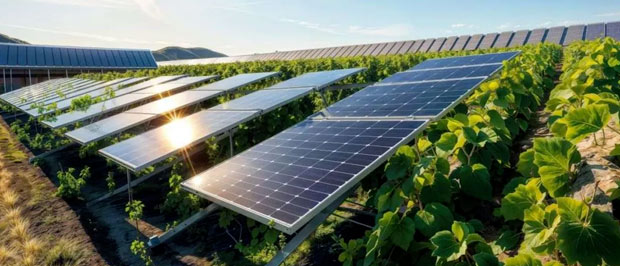
Produzione Energia Rinnovabile
L’Ateneo autoproduce energia pulita per alimentare le proprie strutture, riducendo la dipendenza da fonti fossili.
Impianti e flotta “green”
Le infrastrutture dell’Università sono progettate per essere modelli di efficienza:
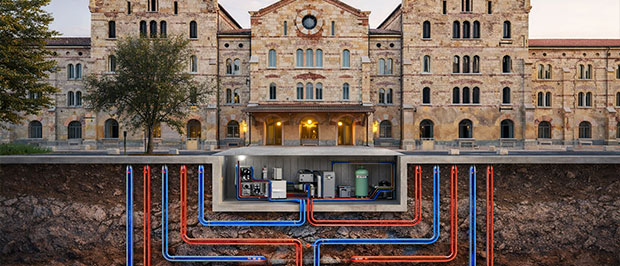
Impianto Geotermico (Santa Marta)
Una rete d’avanguardia composta da 136 sonde che scendono fino a 100 metri di profondità per riscaldare e raffrescare un complesso di circa 22.000 mq.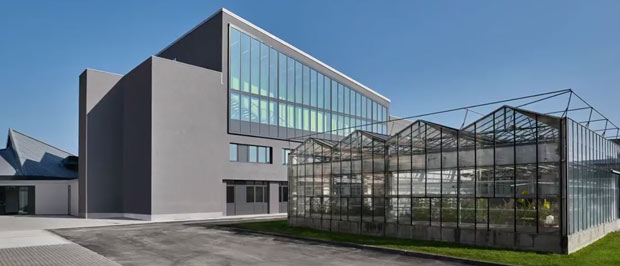
Sistemi Fotovoltaici
Impianti attivi sulle serre di Biotecnologie (15 kW) e su Ca’ Vignal 3 (30 kW), con ulteriori installazioni in corso sull’edificio Biologico 3.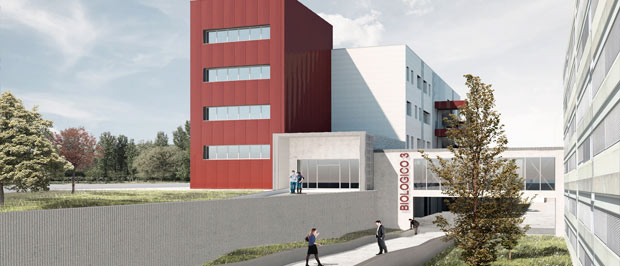
Edilizia in Classe A4
Il nuovo edificio Biologico 3 è stato progettato con i massimi standard energetici, integrando pompe di calore aria-acqua e sistemi di monitoraggio BEMS.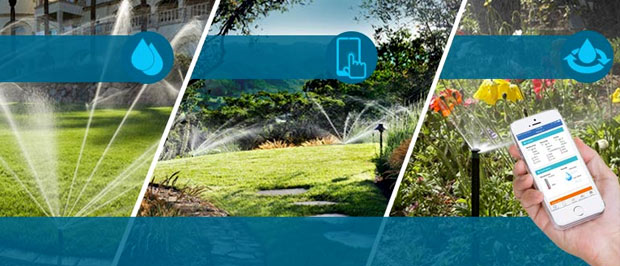
Irrigazione Smart e Monitoraggio Idrico
Utilizziamo il sistema Hunter-Hydrawise che gestisce l'irrigazione in modalità predittiva tramite dati meteo. Inoltre, nel 2024 sono stati installati apparati digitali per il monitoraggio in tempo reale di perdite e consumi idrici.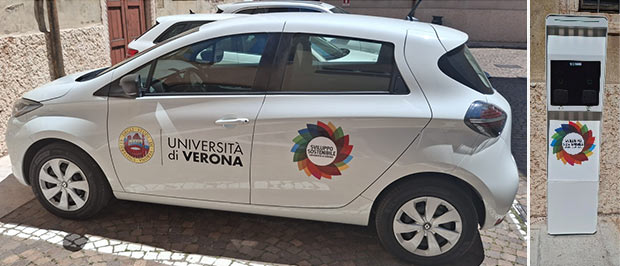
Flotta green
Auto di servizio elettrica e colonnina di riocarica
Campagne di sensibilizzazione
Il cambiamento parte dai comportamenti individuali. L’Ateneo promuove attivamente la cultura della sostenibilità:
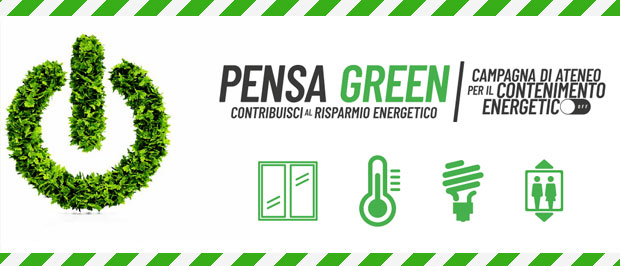
"Pensa Green"
Una campagna permanente che incoraggia l'uso di lampade a LED e la regolazione dei termostati elettronici (limitati a 18-19°C in inverno e 27-28°C in estate).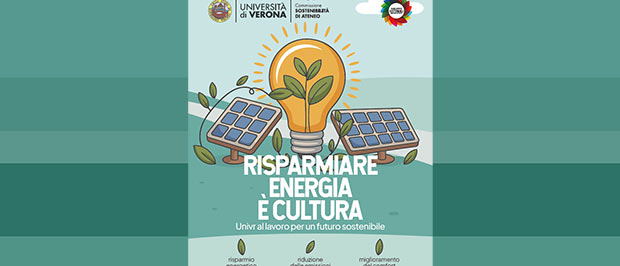
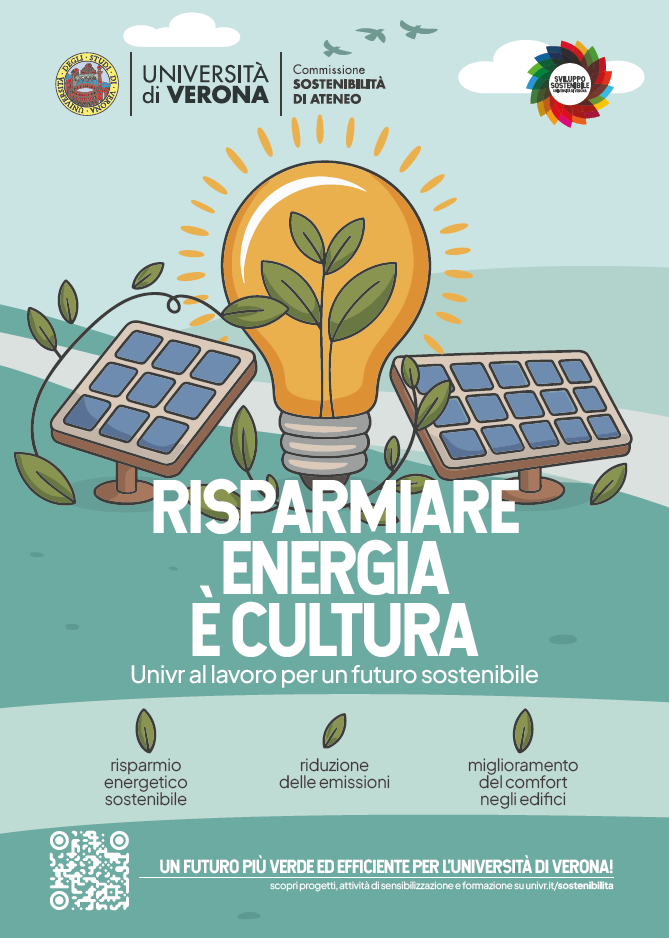
Risparmiare energia è cultura
Campagna di comunicazione delle politiche impiantistiche ed energetiche di ateneo
"Prendi a cuore il tuo Ateneo"
Iniziativa dedicata a ridurre l’impatto ambientale dei festeggiamenti di laurea, incentivando il riciclo e l'uso di materiali sostenibili al posto della plastica.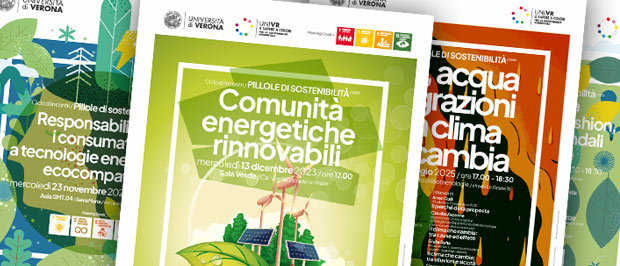
"Pillole di Sostenibilità"
Incontri divulgativi organizzati ogni anno su temi come il futuro del nucleare, la moda circolare e la gestione delle acque.
Mi illumino di meno
L’Ateneo partecipa all’iniziativa "M’illumino di meno" per sensibilizzare la Comunità universitaria al risparmio energetico
Food & Colour
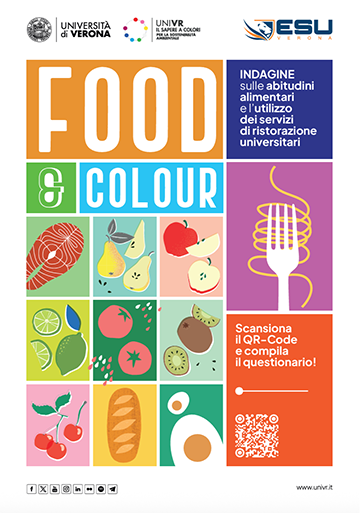
Food & Colour è un progetto di ricerca promosso dall’Università di Verona su richiesta di ESU Verona, con l’obiettivo di analizzare e migliorare i servizi di ristorazione all’interno dell’Ateneo e comprendere le abitudini alimentari della comunità universitaria.
La ricerca si basa sulla somministrazione di un questionario online, accessibile tramite link o QR code, rivolto a studentesse e studenti, personale docente, tecnico-amministrativo, assegnisti, specializzandi e borsisti dell’Università.
Il progetto si propone di raccogliere dati sulle modalità di utilizzo delle mense universitarie — quali strutture vengono frequentate, in quali orari e con quali aspettative — per identificare punti di forza e criticità del sistema attuale. Allo stesso tempo, per la popolazione studentesca si approfondiscono le abitudini alimentari, includendo le scelte di consumo, l’eventuale adesione a diete specifiche e la percezione del proprio corpo.
Food & Colour non si limita a una semplice rilevazione statistica: i risultati serviranno a sviluppare riflessioni più ampie su educazione alimentare e cultura del cibo, contribuendo a orientare le future politiche di ristorazione universitaria verso modelli più sostenibili, inclusivi e in linea con i reali bisogni della comunità accademica.
Responsabile scientifico del progetto è la prof.ssa Debora Viviani del Dipartimento di Scienze Umane.
Food & Colour